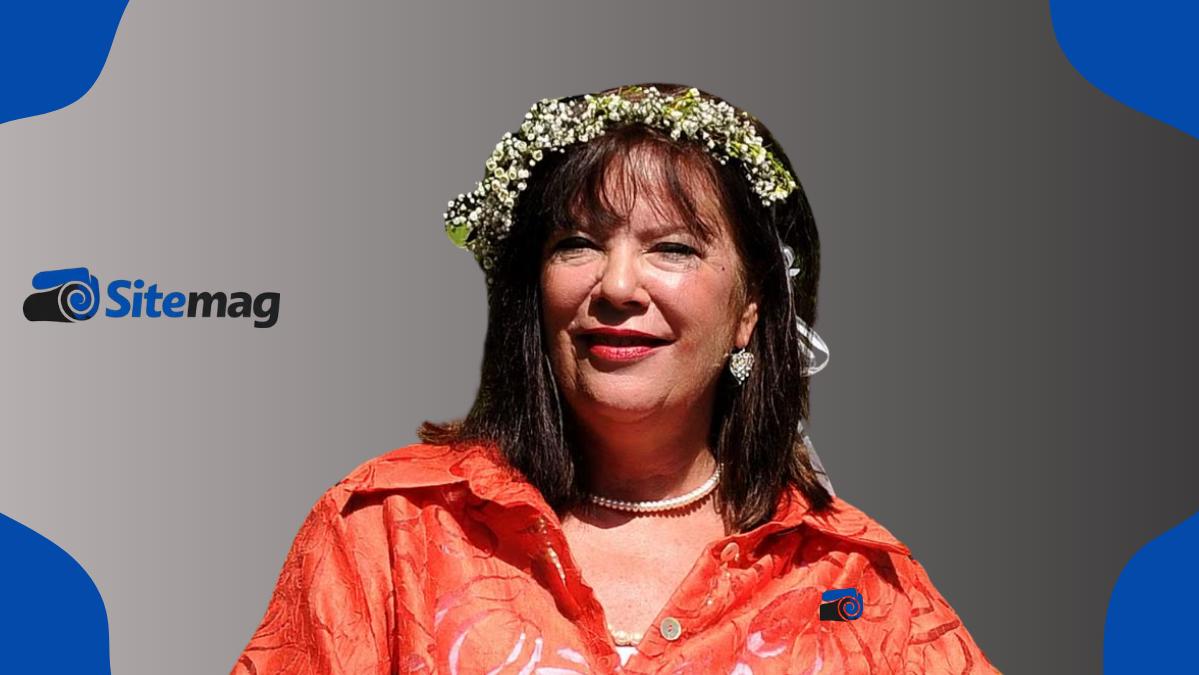
Introduction to Renée Andrietti
Renée Andrietti is a name that tends to surface in scattered references across online discussions, often surrounded by curiosity and ambiguity. Unlike widely documented public figures, there is very limited verified biographical information available about Renée Andrietti, which naturally leads to confusion, speculation, and repeated attempts to piece together her identity.
In many cases, when a name appears without a strong historical or media footprint, it becomes a kind of “search magnet.” People encounter it in passing—maybe in forums, comment threads, or informal articles—and then try to trace its origin. That seems to be the case here as well. The lack of centralized or authoritative records is part of what makes the topic both interesting and challenging to write about.
What’s important to understand from the start is that Renée Andrietti is not a widely documented public figure with a verified, detailed biography in mainstream historical or celebrity archives. Instead, the name exists more in fragments, which often fuels assumptions that may or may not be accurate. So, any discussion about her must be framed carefully and responsibly.
The Limited Public Information Landscape
When researching Renée Andrietti, one of the first things that stands out is how sparse the verified information really is. Unlike public figures who have consistent documentation through interviews, publications, or official records, her name appears in a much more fragmented way.
This lack of structured information creates a unique situation. Instead of a clear narrative, what exists is a patchwork of mentions that are not always consistent with each other. In some cases, names like hers circulate in relation to broader cultural or historical figures, but without strong primary sources to confirm those connections.
Because of this, any attempt to build a complete biography Renée Andrietti becomes more interpretive than factual. Researchers and casual readers alike often find themselves navigating between verified absence and online speculation. That gap is exactly what makes names like this persist in digital curiosity culture.
It is also worth noting that in the modern internet era, even minimal mentions can take on a life of their own. Once a name enters searchable space, it can be repeated, reshared, and reinterpreted without necessarily being grounded in reliable documentation. Renée Andrietti’s case fits neatly into that pattern.
Public Curiosity and Online Speculation
One of the most interesting aspects of Renée Andrietti’s presence online is not what is known, but rather how people respond to what is unknown. Human curiosity tends to fill gaps with narratives, especially when a name sounds distinctive or appears in proximity to more recognizable subjects.
In many instances, names that lack clear documentation become linked—sometimes incorrectly—to better-known individuals or cultural moments. This is less about factual history and more about how information spreads in informal digital ecosystems. Discussions can quickly shift from “who is this person?” to “she might be connected to X,” even when there is no solid evidence supporting such links.
This phenomenon is not unique to Renée Andrietti. It happens frequently with lesser-known individuals whose names appear in partial records or secondary references. Once speculation begins, it can be difficult to separate verified detail from assumption unless strong sourcing is available.
That said, curiosity itself is not a negative force. It often drives people to dig deeper into archives, revisit older materials, and question what is known. In this sense, the interest surrounding her name reflects a broader pattern of how people interact with incomplete historical data in the internet age.
The Challenge of Verifying Lesser-Known Names
From an informational standpoint, Renée Andrietti represents a broader challenge in digital research: the difficulty of verifying individuals who exist on the edge of public documentation. Not every person who appears in online text has a complete or accessible public record.
This creates a gap between visibility and verifiability. A name can be widely seen online while still lacking concrete, authoritative biographical backing. For researchers, writers, and readers, this means approaching such topics with caution and a focus on source reliability.
In cases like this, responsible writing involves acknowledging uncertainty rather than forcing conclusions. It is better to clearly state the limits of available information than to construct a narrative that may not be accurate. This approach preserves credibility and avoids contributing to misinformation.
It also highlights an important lesson about modern information consumption: not everything searchable is fully documented, and not everything documented online is fully reliable. Names like Renée Andrietti sit right at that intersection.
Why Certain Names Stay in Circulation
Even without extensive documentation, some names continue to circulate online for years. Renée Andrietti is an example of how minimal information can still generate sustained attention. This often happens due to repetition across platforms, where one mention leads to another without additional verification.
Another factor is the human tendency to seek patterns and connections. When a name appears in proximity to a more famous context, people naturally assume significance. Over time, this can give rise to informal narratives that persist even without solid evidence.
Additionally, search engines and content aggregation tools can amplify this effect. Once a name gains even slight traction, it becomes part of a searchable ecosystem that reinforces its presence, regardless of how much factual detail exists behind it.
This doesn’t necessarily mean the information is incorrect—it simply means it is incomplete. And in the absence of completeness, interpretation tends to fill the gap.
Misconceptions and the Importance of Caution
One of the risks surrounding lightly documented names like Renée Andrietti is the spread of misconceptions. When information is limited, it becomes easier for inaccuracies to take hold, especially when repeated across multiple informal sources.
This is why careful reading and critical thinking are essential. It is always important to distinguish between verified data and speculative association. Without this distinction, it becomes easy for assumptions to be treated as facts over time.
In professional writing and research, this is why sourcing matters so much. A claim without verification should be treated as uncertain, no matter how often it appears online. In the case of Renée Andrietti, the responsible approach is to acknowledge the lack of clear documentation rather than attempt to fill in gaps with unverified detail.
By doing so, we maintain both accuracy and intellectual honesty, which are essential in any serious informational discussion.
Conclusion
Renée Andrietti remains a name surrounded by ambiguity rather than established biography. What makes her interesting is not a well-documented life story, but the way her name appears in fragmented references that spark curiosity and discussion.
As we’ve explored, the limited availability of verified information creates both intrigue and confusion. It also highlights broader themes about how information circulates in the digital age, especially when documentation is sparse or inconsistent.
Ultimately, the case of Renée Andrietti serves as a reminder that not every searched name comes with a complete story. Sometimes, what exists is just a trace—and interpreting that trace responsibly is more important than trying to force it into a fully formed narrative.
In a world overflowing with information, the ability to recognize what is unknown is just as valuable as the ability to analyze what is known.